According to SPER Market Research, the Global Panel Mounted Industrial Disconnect Switch Market is estimated to reach USD 14.71 billion by 2034 with a CAGR 6.55%.
Introduction and Overview
The report includes an in-depth analysis of the Global Panel Mounted Industrial Disconnect Switch Market, including market size and trends, product mix, Applications, and supplier analysis.
The global Panel Mounted Industrial Disconnect Switch Market was valued at USD 7.8 billion in 2024 and is expected to grow at a CAGR of over 6.55% from 2025 to 2034. The increasing use of automation across industrial facilities, coupled with rising demand for reliable and efficient control systems, is accelerating market growth. Government investments in grid modernization and incentives promoting energy-efficient electrical infrastructure are further strengthening the industry landscape. Rapid industrialization and urban expansion in emerging economies, along with a stronger focus on energy efficiency, are boosting disconnect switch adoption. Additionally, new electrification, manufacturing, and engineering offices in Chennai and Noida are enhancing local capabilities. The shift toward compact, panel-mounted designs supports space optimization and drives wider deployment.
By Voltage:
Based on voltage rating, the industry is categorized into low, medium, and high voltage segments. High voltage panel-mounted industrial disconnect switches are witnessing strong demand, driven by grid modernization initiatives and the electrification of heavy industrial installations. Low voltage variants are widely used in control cabinets, machinery panels, and building automation systems, with stricter safety regulations and preventive maintenance practices supporting adoption. Government-backed grid resilience and modernization programs further strengthen market potential. Meanwhile, medium voltage disconnect switches are gaining traction due to remote operation, interlocking features, and real-time monitoring capabilities aligned with evolving digital infrastructure needs.
By Product:
Based on product type, the industry is classified into fused and non-fused variants. Non-fused panel-mounted industrial disconnect switches dominate the market due to their extensive use in motor control centers, lighting systems, and HVAC applications, where fast and dependable power isolation is essential. Their compatibility with external fuse blocks and circuit breakers further enhances adoption. Meanwhile, fused disconnect switches are gaining steady traction as they offer integrated protection against overloads and short circuits. These solutions are preferred for improving personnel safety, equipment reliability, and simplifying electrical system design.
Regional Insights:
The U.S. panel-mounted industrial disconnect switch market has shown steady growth, supported by rising investments from manufacturers to expand production capacities and by strict compliance requirements under OSHA and NFPA regulations. Across North America, continued modernization of aging electrical infrastructure and the adoption of advanced technologies such as automated fault detection and diagnostics are enhancing market prospects. Recent updates to arc-flash safety standards have further reinforced safety awareness, particularly in low-voltage systems. In Europe, strong emphasis on environmental, social, and governance initiatives along with aggressive net-zero goals is driving demand. Meanwhile, Asia Pacific is benefiting from expanding renewable energy projects and increasing needs for safe electrical systems in advanced manufacturing.
Market Competitive Landscape:
The Panel Mounted Industrial Disconnect Switch Market is highly consolidated. Some of the market key players are ABB, Eaton, Emerson Electric, GE Vernova, Havells, Hubbell, Littelfuse, Rockwell Automation, Schneider Electric, Siemens, Socomec, and WEG.
Recent Developments:
• In March 2025, ABB invested to expand its U.S. electrification manufacturing capacity by enlarging its Mississippi facility and adding new operations in Tennessee, creating new jobs and strengthening domestic production.
• In March 2025, Siemens announced an investment to expand and upgrade its Pomona, California facility, aiming to boost manufacturing capacity for critical U.S. energy infrastructure and support rising demand for energy-efficient technologies.
Scope of the report:
Report Metric Details
Market size available for the years 2021-2034
Base year considered 2024
Forecast Period 2025-2034
Segments Covered By Voltage, By Product
Regions Covered North America, Latin America, Asia-Pacific, Europe, and Middle East & Africa
Companies Covered ABB, Eaton, Emerson Electric, GE Vernova, Havells, Hubbell, Littelfuse, Rockwell Automation, Schneider Electric, Siemens, Socomec, and WEG.
Key Topics Covered in the Report
• Global Panel Mounted Industrial Disconnect Switch Market Size (FY’2021-FY’2034)
• Overview of Global Panel Mounted Industrial Disconnect Switch Market
• Segmentation of Global Panel Mounted Industrial Disconnect Switch Market By Voltage (Low, Medium, High)
• Segmentation of Global Panel Mounted Industrial Disconnect Switch Market By Product (Fused, Non-fused)
• Statistical Snap of Global Panel Mounted Industrial Disconnect Switch Market
• Expansion Analysis of Global Panel Mounted Industrial Disconnect Switch Market
• Problems and Obstacles in Global Panel Mounted Industrial Disconnect Switch Market
• Competitive Landscape in the Global Panel Mounted Industrial Disconnect Switch Market
• Details on Current Investment in Global Panel Mounted Industrial Disconnect Switch Market
• Competitive Analysis of Global Panel Mounted Industrial Disconnect Switch Market
• Prominent Players in the Global Panel Mounted Industrial Disconnect Switch Market
• SWOT Analysis of Global Panel Mounted Industrial Disconnect Switch Market
• Global Panel Mounted Industrial Disconnect Switch Market Future Outlook and Projections (FY’2025-FY’2034)
• Recommendations from Analyst
Global Panel Mounted Industrial Disconnect Switch Market Size- By Voltage, By Product- Regional Outlook, Competitive Strategies and Segment Forecast to 2034
1. Introduction
1.1. Scope of the report
1.2. Market segment analysis
2. Research Methodology
2.1. Research data source
2.1.1. Secondary Data
2.1.2. Primary Data
2.1.3. SPER’s internal database
2.1.4. Premium insight from KOL’s
2.2. Market size estimation
2.2.1. Top-down and Bottom-up approach
2.3. Data triangulation
3. Executive Summary
4. Market Dynamics
4.1. Driver, Restraint, Opportunity and Challenges analysis
4.1.1. Drivers
4.1.2. Restraints
4.1.3. Opportunities
4.1.4. Challenges
5. Market variable and outlook
5.1. SWOT Analysis
5.1.1. Strengths
5.1.2. Weaknesses
5.1.3. Opportunities
5.1.4. Threats
5.2. PESTEL Analysis
5.2.1. Political Landscape
5.2.2. Economic Landscape
5.2.3. Social Landscape
5.2.4. Technological Landscape
5.2.5. Environmental Landscape
5.2.6. Legal Landscape
5.3. PORTER’s Five Forces
5.3.1. Bargaining power of suppliers
5.3.2. Bargaining power of buyers
5.3.3. Threat of Substitute
5.3.4. Threat of new entrant
5.3.5. Competitive rivalry
5.4. Heat Map Analysis
6. Competitive Landscape
6.1. Global Panel Mounted Industrial Disconnect Switch Market Manufacturing Base Distribution, Sales Area, Product Type
6.2. Mergers & Acquisitions, Partnerships, Product Launch, and Collaboration in Global Panel Mounted Industrial Disconnect Switch Market
7. Global Panel Mounted Industrial Disconnect Switch Market, By Voltage, (USD Million) 2021-2034
7.1. Low
7.2. Medium
7.3. High
8. Global Panel Mounted Industrial Disconnect Switch Market, By Product, (USD Million) 2021-2034
8.1. Fused
8.2. Non-fused
9. Global Panel Mounted Industrial Disconnect Switch Market, (USD Million) 2021-2034
9.1. Global Panel Mounted Industrial Disconnect Switch Market Size and Market Share
10. Global Panel Mounted Industrial Disconnect Switch Market, By Region, 2021-2034 (USD Million)
10.1. Asia-Pacific
10.1.1. Australia
10.1.2. China
10.1.3. India
10.1.4. Japan
10.1.5. South Korea
10.1.6. Rest of Asia-Pacific
10.2. Europe
10.2.1. France
10.2.2. Germany
10.2.3. Italy
10.2.4. Spain
10.2.5. United Kingdom
10.2.6. Rest of Europe
10.3. Middle East and Africa
10.3.1. Kingdom of Saudi Arabia
10.3.2. United Arab Emirates
10.3.3. Qatar
10.3.4. South Africa
10.3.5. Egypt
10.3.6. Morocco
10.3.7. Nigeria
10.3.8. Rest of Middle-East and Africa
10.4. North America
10.4.1. Canada
10.4.2. Mexico
10.4.3. United States
10.5. Latin America
10.5.1. Argentina
10.5.2. Brazil
10.5.3. Rest of Latin America
11. Company Profile
11.1. ABB
11.1.1. Company details
11.1.2. Financial outlook
11.1.3. Product summary
11.1.4. Recent developments
11.2. Eaton
11.2.1. Company details
11.2.2. Financial outlook
11.2.3. Product summary
11.2.4. Recent developments
11.3. Emerson Electric
11.3.1. Company details
11.3.2. Financial outlook
11.3.3. Product summary
11.3.4. Recent developments
11.4. GE Vernova
11.4.1. Company details
11.4.2. Financial outlook
11.4.3. Product summary
11.4.4. Recent developments
11.5. Havells
11.5.1. Company details
11.5.2. Financial outlook
11.5.3. Product summary
11.5.4. Recent developments
11.6. Hubbell
11.6.1. Company details
11.6.2. Financial outlook
11.6.3. Product summary
11.6.4. Recent developments
11.7. Littelfuse
11.7.1. Company details
11.7.2. Financial outlook
11.7.3. Product summary
11.7.4. Recent developments
11.8. Rockwell Automation
11.8.1. Company details
11.8.2. Financial outlook
11.8.3. Product summary
11.8.4. Recent developments
11.9. Schneider Electric
11.9.1. Company details
11.9.2. Financial outlook
11.9.3. Product summary
11.9.4. Recent developments
11.10. Siemens
11.10.1. Company details
11.10.2. Financial outlook
11.10.3. Product summary
11.10.4. Recent developments
11.11. Socomec
11.11.1. Company details
11.11.2. Financial outlook
11.11.3. Product summary
11.11.4. Recent developments
11.12. WEG
11.12.1. Company details
11.12.2. Financial outlook
11.12.3. Product summary
11.12.4. Recent developments
11.13. Others
12. Conclusion
13. List of Abbreviations
14. Reference Links
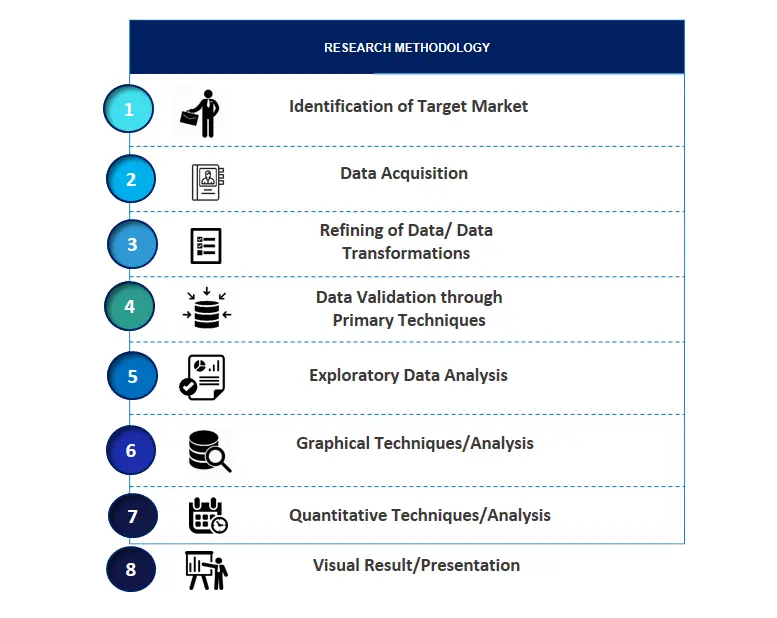
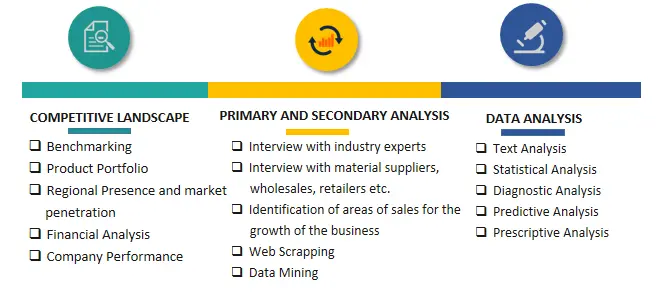
SPER Market Research’s methodology uses great emphasis on primary research to ensure that the market intelligence insights are up to date, reliable and accurate. Primary interviews are done with players involved in each phase of a supply chain to analyze the market forecasting. The secondary research method is used to help you fully understand how the future markets and the spending patterns look likes.
The report is based on in-depth qualitative and quantitative analysis of the Product Market. The quantitative analysis involves the application of various projection and sampling techniques. The qualitative analysis involves primary interviews, surveys, and vendor briefings. The data gathered as a result of these processes are validated through experts opinion. Our research methodology entails an ideal mixture of primary and secondary initiatives.